


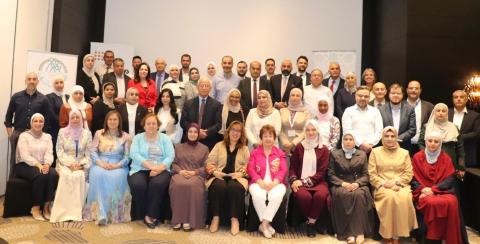
The Higher Population Council, in cooperation with the United Nations Population Fund (UNFPA), launched on Monday the findings of the Study on Disparities Among Users of Modern and Traditional FP Methods and Those With an Unmet Need for FP in Jordan. The event has been organized under the patronage of the Secretary-General of the Ministry of Health for Primary Healthcare and Epidemics, Dr. Riyad Al-Shayab, and attended by representatives of relevant national institutions.
The study aimed to analyze disparities in the use of modern and traditional FP methods and identify the factors influencing FP use and unmet need for FP to inform the design of people-centered interventions that promote equitable access and address the needs of different population groups. The study adopted a mixed-methods research approach combining quantitative and qualitative analysis, supported by a systematic review of the literature to ensure robust and evidence-based findings.
Professor Dr. Issa Almasarweh, Secretary-General of HPC, emphasized that the study reflects a rights-based approach to strengthen couples' ability to make informed reproductive choices. He reaffirmed HPC commitment to advancing policies and programs that improve reproductive health, support families for achieving their reproductive intentions, and integrate population dynamics into development planning, by recognizing FP as a cornerstone of primary healthcare. Almasarweh highlighted that the study identified significant geographical and social disparities in the use of the use of modern and traditional FP methods across Jordan. Unmet need also varies from 10.8% nationally to 23.6% in Mafraq and is higher among women with lower educational attainment and lower socioeconomic status. He emphasized that couples’ ability to make informed decisions about FP lies at the heart these disparities.
Dr. Riyad Al-Shayab Secretary-General of the Ministry of Health for Primary Healthcare and Epidemics highlighted the Ministry’s commitment to strengthening preventive and curative through primary health care, including reproductive health. He noted that the ministry operates (595) health centers across the Kingdom, 80.6% of which provide maternal and child health services, including free FP services. He added that these services are provided through a broad partnership by the Ministry of Health, in collaboration with the public sector, international organizations, community-based organizations, as well as the private sector.
For his part, UNFPA Representative in Jordan, Hemiar Abdel Moghni, emphasized that the value of this study lies not in the data it provides, but also in transforming evidence into knowledge that informs decision-making and guides policies and programs. He reaffirmed UNFPA’s commitment to supporting evidence-based policy-making and its strategic partnership with the Ministry of Health and the Higher Population Council, to translate the study’s findings into practical, measurable interventions.
Dr. Louay Abu Samour, head of the study team, presented the study findings, which identified education, economic empowerment, place of residence, nationality, age, reproductive preferences, number of living children, spousal communication, and quality of interaction with the health system as the main determinants influencing the FP decision-making and implementation.
The study found that higher levels of education and socioeconomic status were strongly associated with increased use of FP methods. Women with higher educational attainment were significantly more likely to use both modern and traditional methods, while those in higher wealth quintiles were more than one and a half times as likely to use FP compared with women in lower wealth quintiles.
The study also identified nationality as a key determinant of FP use and unmet need. Syrian women were less likely to use modern FP methods (30%) and more likely to have an unmet need for FP (40%) than Jordanian women, reflecting the influence of cultural factors, higher fertility preferences, and the complex realities of displacement.
The study found a clear association between the number of living children, women’s fertility preferences, and the use of FP - particularly modern methods. Women with 4-6 children were three times more likely to use FP than those with 0-3 children, with the likelihood increasing further among women with seven or more children.
The study found that age and age at marriage significantly influence FP use. Modern methods were common among younger women, particularly those who married between the ages of 20 and 24, while traditional methods were more common among older women and those who married before the age of 20. The study also found that the likelihood of meeting FP needs increased with age. In addition, high-quality interactions with healthcare providers, spousal communication, and a responsive, privacy-respecting health system are key factors in strengthening women's ability to make and implement informed FP decisions.
Moreover, the study identified significant regional differences in FP use. Women in Mafraq were more than twice as unlikely to use modern FP methods as those in Amman, while women in the South were nearly 50% less likely to have their FP needs met and women in rural areas were 20% less likely than those in urban areas. The findings suggest that these geographical disparities are driven by interconnected social, cultural, and economic factors that limit women’s autonomy and access to FP services
On the sidelines of the event, participants were divided into four thematic working groups to discuss implementation of the study's recommendations. Key priorities included strengthening legislation and policies, integrating FP into universal health coverage, improving the availability and quality of services in underserved areas, investing in the health workforce, promoting community and digital approaches to reproductive health, and expanding awareness campaigns tailored to different population groups.