


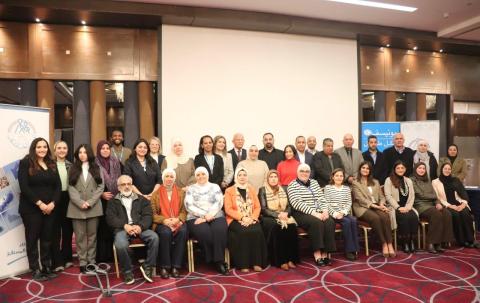
The Higher Population Council, in collaboration with UNICEF and the Ministry of Education, and with the participation of the Ministry of Health and other relevant stakeholders, organized the first meeting of the working group concerned with school health that is responsive to gender needs. The meeting aimed to develop a plan and mechanism for implementing a roadmap to enhance the responsiveness of the school environment and activities to the needs of adolescent girls, and to ensure a healthier, more inclusive, and supportive educational environment.
The meeting aimed to discuss the integration of gender-responsive school health into the SRHR and its implementation plan, as well as to follow up on several indicators to measure progress in the responsiveness of the school health environment to the health needs of adolescent girls.
During the meeting, the Secretary-General of the HPC, Professor Dr. Issa Al-Masarweh, pointed to the central role of educators, school infrastructure, curricula, and extracurricular activities in responding to everything that enhances the protection of the health status of successive cohorts of adolescent boys and girls before they graduate from their schools. He noted that attention to this matter falls within the educational process that responds to the developmental needs of adolescent girls within the school environment.
For his part Jesus Trelles, Chief of Water, Sanitation and Hygiene at UNICEF, stated in his remarks that UNICEF supports efforts to ensure that adolescent girls have access to menstrual health services and facilities in schools as an essential matter for protecting their health, upholding their rights, enhancing their self-confidence, and enabling them to continue their education without obstacles, within a safe and supportive school environment. He considered the formation of the national working group as a fundamental step towards integrating this issue into national systems in a sustainable and coordinated manner.
During the meeting, Juanna Samaawi, Coordinator of the Reproductive Health and Gender Program at the HPC, presented an overview of some fundamental health issues within the school environment, specifically the health aspects related to personal hygiene during menstruation for adolescent girls. She also presented proposals on ways to integrate responses to this issue into the SRHR Researcher in Gender and Reproductive Health at the HPC, Woroud Al-Batoush, addressed the need to form a working group of school health stakeholders to follow up on this issue and measure progress indicators in implementing the adopted roadmap.
Khitam Malkawi, Head of the Gender Unit at the Ministry of Education, addressed the integration of menstrual health and hygiene for adolescent girls within the framework of the Education Strategic Plan (ESP). Meanwhile, Dr. Tareq Al-Daamen, Head of the Residential Centers Department at the Ministry of Health, reviewed the integration of this topic into the school health strategy and activities in schools. In addition, consultant Dr. Kafa Akroush provided an overview of the Standard Operating Procedures (SOPs) for the Gender-Responsive School Health Working Group. At the conclusion of the meeting, the next steps for initiating the implementation of the proposed and agreed-upon initiatives were discussed and approved. Agreement was reached on the frequency of the national working group meetings, and on commencing institutional coordination to prepare scientific materials related to gender-responsive school health, identifying gaps and working to address them, building upon previous scientific materials, guides, and efforts to avoid duplication of work. Emphasis was also placed on the role of the national working group in aligning indicators with the local cultural context.